Penetration testing is one of the best security investments a business can make. But there’s a problem almost nobody talks about.
Many organisations run pentests purely to tick compliance boxes. They get a report, patch what’s found (when they can afford to), and repeat the exact same scope next year. On paper, this looks responsible. In reality, it creates something far more dangerous: a false sense of security.
This is the Pentest Trap.
Before you continue, cybersecurity comes with a fair amount of jargon. If any terms in this article are confusing, you may find a quick explanation of them in our cybersecurity glossary.
What is the Pentest Trap?
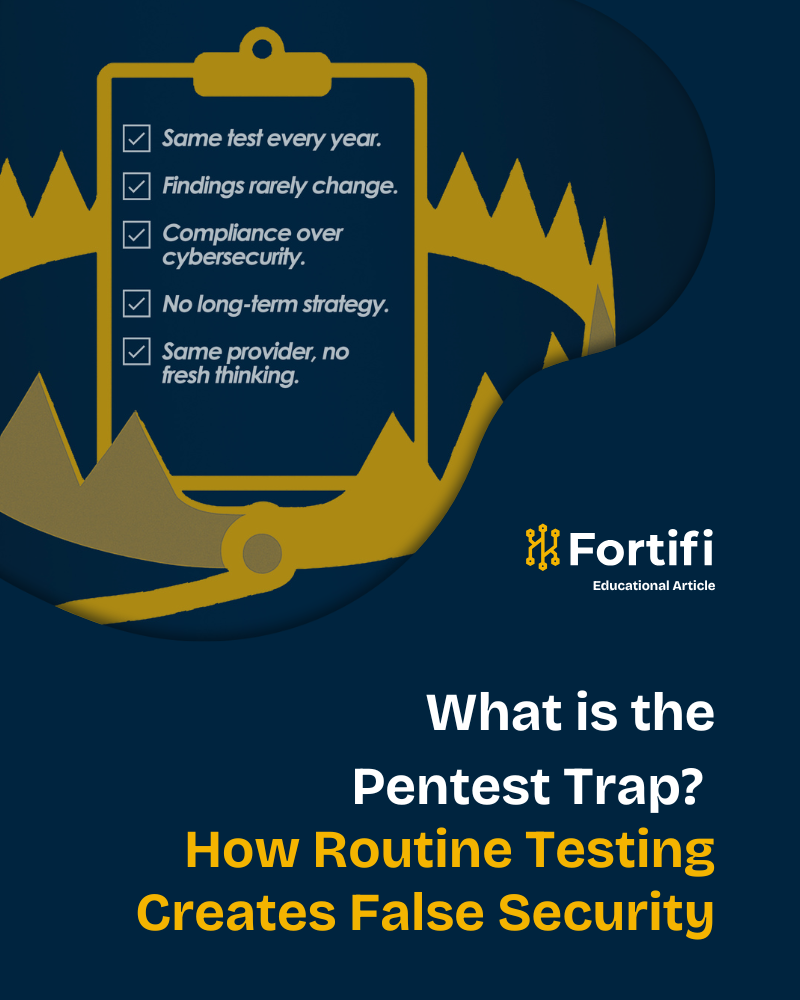
The Pentest Trap happens when penetration testing turns into a predictable annual ritual. You test the same scope, get similar findings, fix the obvious issues, and assume you’re improving. But if the engagement looks identical every year, the value drops.
The trap isn’t doing pen tests. It’s doing them without a strategy.
Your environment constantly changes. New systems and suppliers. New cloud infrastructure. New users and permissions. New SaaS tools are quietly deployed by teams. New ways attackers exploit organisations, especially through identity theft and social engineering.
If your testing stays static while your organisation evolves, you’re measuring yesterday’s risk while today’s threats walk straight past you.
Related Reading: Penetration Testing: Outside-In vs Inside-Out (Which One Does Your Business Actually Need?)
Why It Feels Like You’re Doing Security Properly
The Pentest Trap is convincing because the checkboxes get ticked. Compliance? Done. Testing? Done. Findings fixed? Done.
Most people assume that fixing the issues in the report means they’re more secure. But the most important question rarely gets asked: “Were we testing the right thing in the first place?”
If the scope doesn’t align with realistic threats and critical attack paths, the outcome is limited, even with perfect remediation.
Related Reading: Why Cyber Essentials Alone Won’t Protect You: Building Real Cyber Resilience
Four Signs You’re Stuck in the Pentest Trap
1. Same Test, Different Year
Repeat findings. Repeat scope. Repeat recommendations. This is Groundhog Day security: familiar, comfortable, and increasingly ineffective.
If the same problems keep appearing, you’re patching symptoms, not fixing causes.
2. You’re Testing for Auditors, Not Attackers
Compliance-driven testing prioritises what looks good in an audit, not what stops breaches.
Auditors want coverage and paperwork. Attackers want one working path into your environment. Those aren’t the same thing.
3. There’s No Strategy, Just “Schedule the Test Again”
If your test exists because it’s “that time of year,” you’re trapped. Security testing should be risk-driven, not calendar-driven.
Ask internally: “What are we trying to learn from this test that we didn’t know last time?” If nobody has a clear answer, the engagement is routine.
4. You Stick With the Same Provider Every Time
A trusted partner matters, but familiarity creates blind spots. When a provider tests the same environment year after year, the engagement becomes predictable and templated.
Fresh eyes often find issues everyone else missed.
Why the Pentest Trap Happens
This trap is common and understandable. It usually happens for three reasons.
Testing becomes a procurement exercise.
When pentesting is purchased like a commodity (cheapest quote, fastest turnaround), quality suffers. You get a report, not insight.
“Equal coverage” feels fair.
Many businesses test everything because it feels responsible, but not all assets carry equal risk. Priorities should be based on where critical data lives, what systems enable core operations, and which endpoints can lead to catastrophic compromise.
The organisation changes faster than security processes.
New cloud components. Shadow IT. Mergers and acquisitions. Internal changes that affect access and identity. If the testing plan doesn’t evolve, risk accumulates silently.
Related Reading: Supply Chain Cyber Attacks: Why Your Supplier’s Problem Becomes Yours
How to Escape the Pentest Trap
Escaping the Pentest Trap doesn’t mean spending more money. It means testing with intent.
Align Testing to Real Business Risk
Start with business impact, not technical scope. Ask what would actually hurt you if compromised. Where is your most sensitive data? What systems would shut down operations?
Then test the attack paths leading to those outcomes.
Change Focus Year on Year
A strong testing strategy evolves. One year might focus on the external attack surface. Another year might prioritise phishing resilience and identity compromise. Another might focus on lateral movement into sensitive systems.
Related Reading: External Attack Surface Testing vs Traditional Pen Testing: Why Scope Matters More Than Frequency
Build a Multi-Year Approach
Pen testing shouldn’t be isolated projects. It should be a programme. A multi-year testing strategy means each engagement builds on the last, improving real security posture over time.
Bring Fresh Eyes to Uncover Blind Spots
Whether that means a new provider, a different test style, or a deeper engagement, a fresh perspective often breaks the cycle.
Blind spots aren’t always technical. They can be process gaps, overlooked privilege paths, or gaps between policy and reality.
Verify Fixes Through Re-Testing
Fixing issues isn’t enough. Re-testing ensures changes actually solved the problem and didn’t introduce new ones. It also forces prioritisation on what truly matters.
Related Reading: The Importance of Retesting After Fixing Cybersecurity Vulnerabilities
The Goal: Measurable Resilience, Not Checkbox Security
The goal isn’t to “pass” penetration tests. The goal is to become genuinely harder to breach, year on year.
When a business escapes the Pentest Trap, testing becomes what it was always meant to be: a source of real insight, a driver of better decision-making, and a practical way to reduce risk.
Conclusion
The Pentest Trap isn’t caused by bad intentions. It’s caused by routine.
If your pen tests feel familiar, predictable, and repetitive, it’s time to rethink what you’re buying. Testing should evolve with your organisation, focus on real attack paths, and contribute to a bigger security strategy.
Make that shift, and penetration testing stops being a compliance ritual. It becomes a real-world security advantage.
Related Reading: Penetration Testing: A Comprehensive Guide